

























Editor’s Note
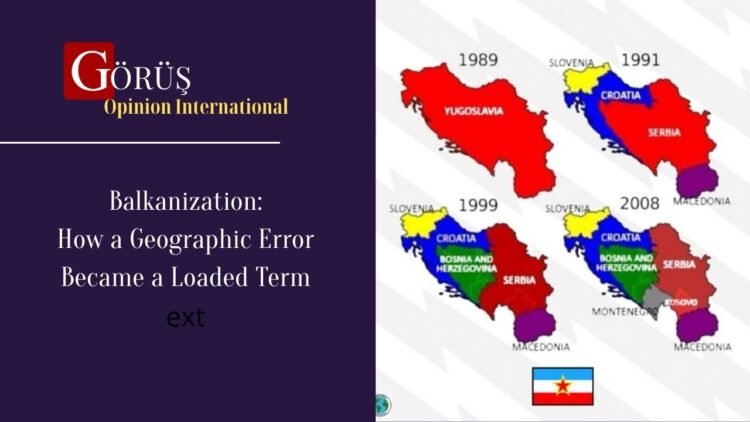
This article is a personal account of the moment when the Socialist Federal Republic of Yugoslavia began to disappear. While written from an individual perspective, it captures a broader historical rupture — the disintegration of a multi-national socialist state under conditions of economic strain, political fragmentation, and rising nationalism.
Yugoslavia’s collapse is frequently explained through cultural or ethnic narratives that treat its breakup as inevitable. This framing obscures the material conditions that shaped the period: mounting debt, austerity measures, institutional decay, and the erosion of the economic arrangements that had previously sustained social cohesion. As the federal system weakened, political authority fractured, and nationalist projects filled the vacuum.
This articel offers more than historical testimony. It invites readers to consider how economic dislocation, when unmanaged or mismanaged, can transform political conflict — and how the loss of shared social institutions can rapidly turn uncertainty into open confrontation.
The Day My Country Died: A Balkan Memory and the Failure of Socialist Yugoslavia
By Jovan Matić — translated and re-framed for a political economy readership
It was June 25, 1991. At Ljubljana Airport in the Slovenia Socialist Republic, I stood waiting for my luggage, surrounded by fellow passengers fresh off a flight from Belgrade. We joked about whether our bags would show up in the “national” or “international” carousel — an odd concern, perhaps, but hardly anyone expected what was about to unfold.
This was a time of rising nationalism and deepening economic crisis within the Socialist Federal Republic of Yugoslavia. Just two years after the fall of the Berlin Wall — the event that marked the beginning of the end for European state socialism — old certainties were unraveling. Amid economic stagnation, unemployment, and growing class tensions, nationalist politics filled the vacuum left by disintegrating socialist institutions.
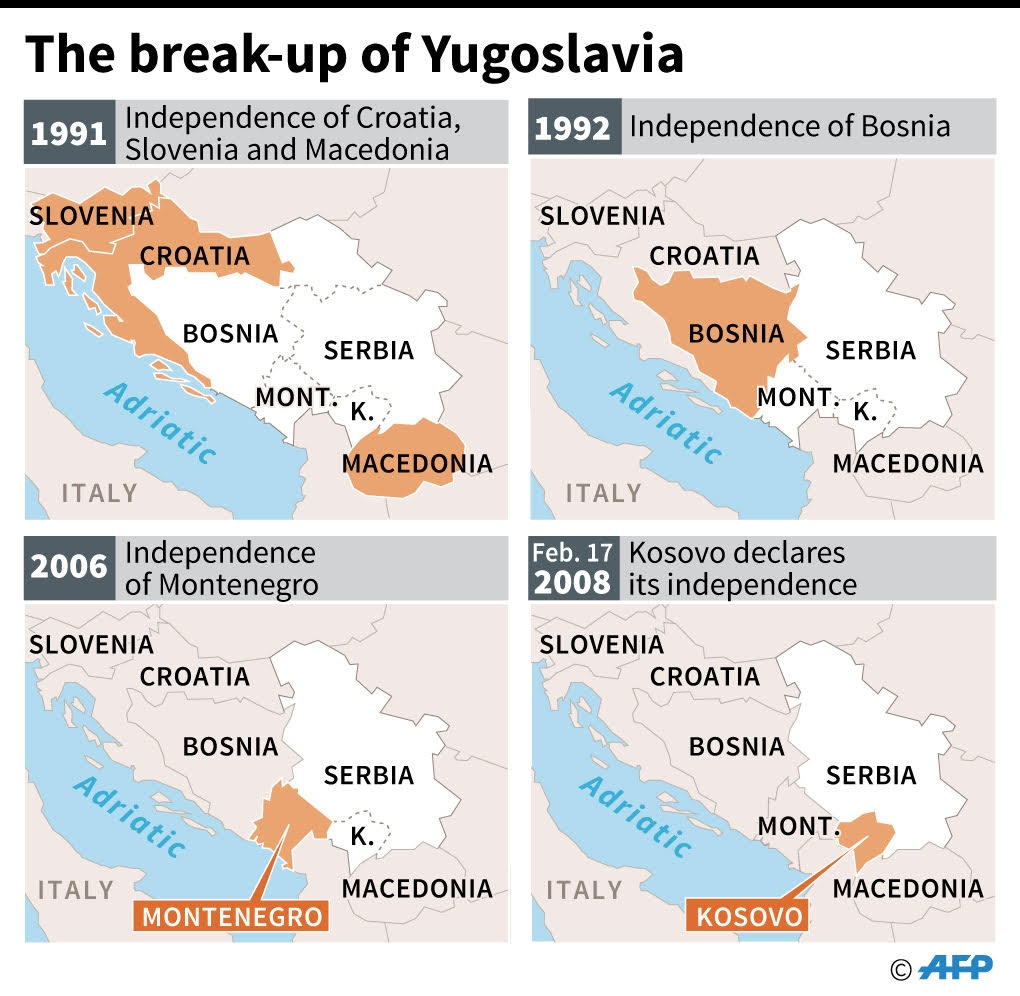
In Slovenia, the regional government surprised Belgrade by declaring independence a day ahead of schedule. At first, the reaction was festive — streets filled with cheers and beer flowed freely under newly unfurled flags. For a moment, the promise of liberation seemed real.
But that joy was surreal: this celebration was the spark that would ignite the Yugoslav Wars — a series of conflicts that would claim over 130,000 lives and leave deep scars across the region.
From Bureaucratic Breakdown to Fratricidal War
The next morning, optimism evaporated. I learned — via a passing Italian speaker — that war had broken out back home. Panicked, we rushed to the border only to find long lines of cars blocked by Italian police. Fired tanks of the Yugoslav Army (JNA) appeared abandoned on rural roads, a foreboding sign of the chaos to come.
These were not the orderly political changes predicted by Western commentators who celebrated the “end of history” and the supposed inevitability of liberal capitalism after 1989. Here was something far messier: a dissolution driven by rising ethno-nationalism and a state unraveling under economic pressure.
On the streets back in Ljubljana, the festive mood had vanished. Makeshift barricades appeared, sporadic gunfire echoed through nearly empty avenues, and the sense of normalcy evaporated. The federal army deployed across borders ordered by Belgrade — a desperate attempt to contain centrifugal forces — signaled not unity, but collapse.
Crossing the Point of No Return
As jets thundered overhead and sirens blared across the city, it became impossible to deny the truth:
We had crossed a point of no return. My country was going to disappear.
For decades, Yugoslavia had been an uneasy federation of republics — each with distinct histories, languages, and economic profiles. But it was precisely the absence of a shared material basis for solidarity — the fracturing of Yugoslavia’s state-run economy and the erosion of working-class unity — that made space for nationalist elites to exploit popular fears.
What started as a short conflict in Slovenia soon became the opening act in a decade of Balkan violence: Croatia’s war, Bosnia’s genocide, Kosovo’s uprising and NATO’s bombing of Belgrade. Tens of thousands would die, and the entire region would be reshaped in ways that still reverberate today.
Beyond Nostalgia: Understanding a Fragmented Past
Looking back from today’s vantage point, it’s tempting for Western observers to reduce this history to simple narratives of ethnic hatred or ancient feuds. But that obscures vital truths.
The Yugoslav experiment — imperfect and incomplete as it was — represented a post-war attempt to organize society on collective lines, blending self-management with federal institutions. Its collapse was not an inevitable outcome of “ancient hatreds,” but the product of a system in crisis, undermined by global neoliberal pressures, austerity, and the decline of socialist infrastructure.
As economic hardships deepened in the 1980s, local elites shifted from class-based politics to national agendas, convincing communities that their salvation lay in ethnically defined “self-determination” rather than shared material interests. This transformation — from solidarity to sectarianism — was a political choice, conditioned by economic dislocation.
A Memory for Our Times
The day my country died was not merely the legal dissolution of a state. It was the moment when politics disconnected from a shared project of collective life — when economic fragmentation gave rise to factional identities and war became imaginable.
For contemporary readers witnessing similar fractures in other parts of the world, the Balkans offer a cautionary lesson: when economic crises are left to fester without collective remedies, nationalism can fill the void — and the first casualties are solidarity and working-class power.
Editors Conclusion
Yugoslavia’s disintegration was not an isolated tragedy, but an early warning. Across Europe, prolonged austerity and inequality have fueled nationalist politics and institutional decay. In the Middle East, economic stagnation and externally imposed restructuring have contributed to state collapse and chronic conflict. Throughout the Global South, debt dependency and market-driven reforms continue to fracture social life. Yugoslavia’s lesson remains urgent: when economic crises are managed through fragmentation rather than solidarity, political breakdown is not an exception — it is a likely outcome.