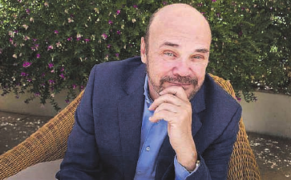





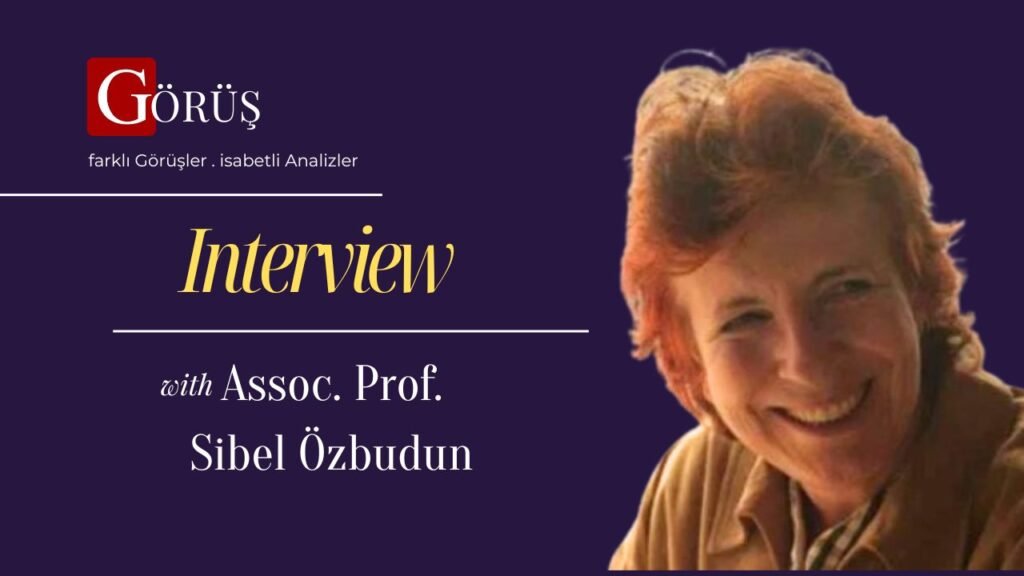
Interview with Assoc. Prof. Sibel Özbudun (translated into English)
Görüş21: Dr. Özbudun, how should we interpret the U.S. operation targeting Nicolás Maduro and his wife? What does it mean in terms of international relations?
Sibel Özbudun: I don’t think this requires a “deep reading.” Everything is so clear before us that little interpretation is needed. Imperialism is simply acting as imperialism and doing what it generally does. And Trump’s reckless stance allows no plausible alternative interpretation.
The issue is very clear: it is aggressive U.S. imperialism attacking, and the people of Venezuela who are under assault. From the Monroe Doctrine through John F. Kennedy’s assertion that the Western Hemisphere “must remain the master of its own house,” up to Trump, the fundamental approach hasn’t changed.
This time, too, the United States wraps its drive for regime change, plunder, and regional control in the rhetoric of a “war on drugs” — reminding one of the line from Sleepy Hollow (1999): “Evil can wear many masks. None is more dangerous than the mask of goodness.”
There should be no doubt: the U.S. -a state that doesn’t regard itself as bound by national or international law- attack on Venezuela is pure banditry. It pulverizes the already hollow norms of international law — as we’ve seen in Palestine — rendering institutions like the UN or international courts effectively meaningless.
G21: If Maduro is forced off the stage, will that create a power vacuum in Venezuela, or will the system continue?
Özbudun: Certainly there will be a vacuum. It’s not simple. You remove a sitting head of state and take him prisoner — the political psychology of this is devastating.
G21: Who do you think will be the most decisive actor in Venezuela’s next stage — the army, the government, or the streets?
Özbudun: The army, the government, the streets, and all social forces will be shaped by class struggle and the anti-imperialist fight. The decisive dynamic will be the organization and leadership of the poor. While that has suffered serious setbacks in Venezuela, the final word has not yet been said.
G21: Why has the response from the Vice President-turned-President been so measured toward the U.S.? Is that a conscious choice?
Özbudun: Vice President (now President) Delcy Rodríguez’s low-profile response stems from her current disposition. The Hydrocarbons Law, which opens Venezuela’s energy sector to foreign capital and joint ventures — approved by the National Assembly — may explain her restrained reaction. A “conscious choice”? It’s possible, but it might also reflect a search for new strategic ground. (Avrupa Postası)
G21: Does this perception of a “weak response” undermine the government’s legitimacy among the public?
Özbudun: Certainly. As Antonio Gramsci said, “Every collapse brings intellectual and moral decay,” especially among the poorest.
G21: Why has the U.S. taken this step now? Is it about energy, geopolitics, or domestic politics?
Özbudun: As I said at the start: it’s simple — imperialism is acting as imperialism. Trump himself has admitted part of the reasoning: he said that, in one day, the U.S. took $4 billion worth of Venezuelan oil and that its value will rise over time while American energy companies profit. (Avrupa Postası)
G21: What does the lack of a strong reaction from other Latin American countries mean? Is Venezuela being left alone?
Özbudun: It’s ironic: some like Cuba, Colombia, Mexico, and Brazil seem restrained while others — from Argentina’s Javier Milei to El Salvador’s Nayib Bukele — have embraced Trump’s actions. In many cases, right-wing regimes that have rolled back the “Pink Tide” are cheering on this intervention.
G21: Could this signal the beginning of a new era in U.S.–Latin America relations?
Özbudun: I see not a new era but a continuation of an old one. The U.S. is revitalizing the Monroe Doctrine not only in Latin America but also in other theaters like Palestine, Iran, and Greenland. Its aim extends beyond influence in Latin America to control of all strategic resources — rare elements, oil, gas, land — using even pirate-like tactics to seize a sovereign nation’s elected leader.
G21: How might the Venezuelan opposition use this crisis — as an opportunity or a risk?
Özbudun: You cannot predict a war’s outcome without fighting it. The biggest opportunity lies in risk — avoiding risk is the greatest threat, as Che Guevara said: “If there is nothing worth dying for, then there is nothing worth living for.”
G21: Finally, how do you see Venezuela’s future? Is the transition being managed?
Özbudun: Despite the mention by Venezuela’s ambassador to Turkey of seeing the Turkish Republic as a “model,” I foresee major upheavals and turbulence ahead.
Dr. Özbudun, we would like to thank you for your time and for the insightful interview you kindly shared with G21