





















A striking analysis of the signs of the apocalypse, the possibility of a third world war, the global crisis, and the collapse of capitalism. Discover how wars, economic inequality, and the ecological crisis are affecting the world.
Opinion International / Gorus21.com
“The most beautiful sea is the one not yet sailed.The most beautiful childis the one not yet grown. Our most beautiful days are those we have not yet lived…”
One day, the world will be covered in smoke. Creatures from beneath the earth will emerge; the sun will rise in the west and set in the east; Gog and Magog will be unleashed; massive earthquakes and collapses will occur; a fire will spread from Yemen… Then Jesus Christ will descend to earth and wage war against the Antichrist.
These are the “signs of the apocalypse.” In all monotheistic religions—and in many others—the idea of the apocalypse plays a central role. When these signs appear, great disasters will unfold: wars, earthquakes, fires… all living beings will perish, a savior will emerge to fight evil, and after victory, the dead will rise and an eternal age of happiness will begin.
Some may remember: according to the Mayan calendar, the apocalypse was supposed to occur on December 21, 2012. People rushed to the village of Şirince, believing it to be a safe haven.
This was not the first such prophecy. History records many similar panics—from the Assyrians and Egyptians to Pope Sylvester II’s prediction that the world would end in the year 1000. People gave away their possessions, prayed in churches, and uprisings occurred. Or the 1524 prophecy by astronomer Johannes Stöffler that a flood would destroy the world—leading people to build boats and fight for places on them.
Regardless of their failure, the apocalypse remains a powerful metaphor—especially for understanding our present.
Capitalism and the Apocalypse
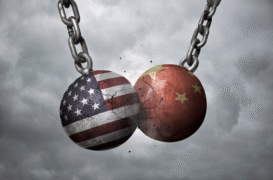
“Apocalypse” is never absent from capitalism. Today, we are once again living through a period where crises trigger wars and wars deepen crises: the Russia–Ukraine war, Israel’s genocide in Gaza, and the ongoing U.S.–Israel/Iran war since early 2026.
Add to these extraordinary developments—such as the U.S. kidnapping Venezuela’s President Maduro or Trump’s claims over Greenland and Canada—and the “signs” become clear.
Search “World War III” and you’ll find endless results. The possibility of nuclear escalation seems closer than ever.
This is not alarmism. It is an attempt to point out the structural, chronic, and irreversible crises of capitalism—crises that push states to destroy the world in pursuit of power.
Endless Crisis
Since the 1980s, capitalism has been trapped in continuous crisis: the 1997 Asian crisis, the 2001 global crisis, the 2008 financial collapse, Greece’s economic downfall, Argentina’s debt crisis, and the COVID-19 crisis. The promise that capitalism would bring eternal peace has clearly failed.
Neoliberalism has created massive inequality. Today, a handful of individuals possess as much wealth as billions of people combined.Unemployment grows, wages fall, and consumption declines. Most importantly, finance has become disconnected from real production—creating an artificial economy detached from reality.
Crisis is no longer an exception—it is the norm.
Worse still, the current crisis (chronic, deep, and structural) has long ceased to be merely “economic” and has incorporated many dimensions: ecological, social/human… It is increasingly possible to speak of a “civilizational crisis.”
The crisis is also ecological, because a system that prioritizes profit rather than human beings is driven to rapidly consume natural resources and turn them into profit. CO₂ and methane gases released into the atmosphere, soils, seas, and rivers that are rapidly polluted and poisoned with chemical waste, destroyed forests, depleted biodiversity, the export of garbage and toxic waste from rich countries to poor ones… And the insatiable greed of capitalism, which responds to the warnings of scientists and experts—who declare that global warming has reached the point of no return—with deceptive, superficial measures, and even commodifies efforts to save the planet, turning them into sources of profit…
The crisis is also social/human; because the global wealth gap creates a human tragedy in which, on one side, an unimaginable wealth accumulates in the hands of a handful of plutocrats—wealth they could not exhaust over generations (fleets of Rolls-Royces, private yachts, jets, islands, billion-dollar residences, private security armies, tourist trips to space, parties where $50,000 bottles of champagne flow like water…)—while on the other side pile up deaths under collapsed cranes, deaths from preventable diseases, malnutrition, freezing in the cold, hunger, illness, inability to attend school, searching for food in garbage, begging, the brutality of refugee camps, becoming victims of organ or prostitution mafias, prisons, gang wars… As the number of those who lose the chance to be included in the system as producers and (more importantly) consumers multiplies each day, an excluded, marginalized army of the hopeless keeps growing.
As this multidimensional crisis in which global capitalism flounders drags all its aspects toward an irreversible point, it deserves to be defined as a “civilizational crisis.” As the bourgeoisie sheds the values that accompanied its rise as a class (“freedom, equality, fraternity, secularism, democracy…”), and as neoliberalism weakens nation-states—especially in the Global South—it becomes a “civilizational crisis” marked by intensifying ethnic and religious conflicts. It is a “civilizational crisis” in which life on Earth can only be sustained by replacing it with a different, new, classless, non-exploitative civilizational paradigm…
The strategy of capitalist (states) to overcome the crisis is, of course, not to abandon capitalism. The effort to expand their shrinking share through the use of force has been the primary method of overcoming crises in capitalism since the age of mercantilism. War has enormous value for the system. On the one hand, by triggering global military expenditures—reaching $2.7 trillion today—it enables the annual turnover of the top 100 arms companies to reach $679 billion (2024 data); on the other hand, with the destruction it creates, it “revitalizes” sectors such as construction, infrastructure, and manufacturing! In other words, it “gets the wheels of the economy turning again.” Of course, there is also the added benefit that the victorious side seizes the defeated side’s resources—water, energy, rare elements, strategic positions, etc.—imposes tribute, and subjugates it under commercial domination…
In short, capitalism cannot function without crises and wars.
So, what do crisis and war mean for ordinary people, especially women? I mentioned multiple and intersecting crises above; each of these further increases the burden of being a woman in this world… Let us calculate this burden in our own geography:
Economic/financial crisis: It has long been said that economic/financial crises have a dual effect on women workers (like the statue of Janus). The first of these has been valid since the “industrial revolution,” when women were drawn en masse into production outside the household: women, seen as a “reserve labor force,” are dismissed during times of crisis to make room for the primary “breadwinner” of the household and to reduce reproduction costs.
However, recently we observe that the opposite trend has come into play. Sensing that women workers are more willing to work for lower wages and longer hours, while also undertaking reproduction “duties” without pay, employers seem to prefer employing women during crisis periods. Indeed, even with all necessary caution, data from one of Turkey’s most “reliable” (?!!) institutions, TÜİK, confirms this trend. According to these data, while the male unemployment rate in Turkey decreased from 8.2% in December 2022 to 7.1% in December 2023—a one-year decrease of 1.1%—female unemployment, which was 14.4% in December 2022, fell to 12% in December 2023—a decrease of 2.4%. In other words, employers preferred women in hiring…
Why do you think that is? Do employers want to contribute because they believe women need to be “empowered”? Or do they prefer women because, within the historical division of labor, they are perceived as compliant, attentive, highly focused, and most importantly less demanding—in other words, to maintain or increase profit margins? After all, the traditional division of labor has taught women that, even if they work, their primary duty is to care for the home and children. Therefore, they generally do not see themselves as the main breadwinner. They work out of necessity, with the hope of returning home once difficulties are overcome… They can hardly stop perceiving themselves as “temporary workers.”
There is something else we know: employers loved the “working from home model” that became widespread in the service sector during the pandemic. (Let us add immediately: “working from home” had already been widely applied in the production sector before the pandemic, especially among small and medium-sized enterprises in provincial areas—particularly in the textile sector, as piecework…) From their perspective, they are justified in liking it: they can save money by shifting expenses such as meals, transportation, lighting, heating, and even toilets onto workers, and moreover, they can avoid “sources of discord” such as organization in the workplace, strikes, slowdowns, and protests. It is no coincidence that organizations like TÜSİAD, TÜRKONFED, TİSK, and MÜSİAD lavish praise on working from home, or “flexible work,” as it is also called.
So who is it that most often engages in “working from home”? You guessed it—once again, women… In fact, official sources report that women’s employment has increased thanks to “flexible working” models [that is, part-time, temporary, home-based… in other words, low-paid, insecure, isolated…]. The Minister of Family and Social Services, Mahinur Özdemir Göktaş, even heralds that they are focusing on flexible, remote, and hybrid work models “so that women do not have to choose between home and working life.”
This “good news” brings us to the second burden that the economic crisis places on women: the near-total imposition of domestic labor—that is, reproductive activities—on their shoulders… In times of crisis, the purchasing power of workers, laborers, retirees, and low-income groups declines even further. Managing a household with a shrinking budget, chasing discounted products, waiting for cheaper hours at the market, perhaps rummaging through trash, mending torn clothes, altering and repairing old garments, caring for the elderly and the sick at home, creating “miracles” with pasta, eggs, and tarhana, standing in line at public bread outlets, turning off the heater when alone at home, going to clean other people’s houses for extra income, knitting socks, hats, scarves… all of this falls to them. Whether they have paid employment or not…
In other words, whether women work for capitalism or not, they function as “cost-reducing elements of production”… through their cheap, unorganized labor and the unpaid domestic work they perform…
This situation does not add value to women. On the contrary, it devalues them. At the root of this “devaluation” lies the historical hierarchy between women and men, without a doubt: a hierarchy that celebrates the birth of a boy but mourns the birth of a girl, that raises girls with a mindset of “obedience to the father, service to the husband,” that feeds on the fact that nearly half of the women in this region depend economically on their husbands, and that is obsessed with virginity…
Social/human crisis: However, the spiral of femicides and violence against women—something women experience and which increasingly resembles a horror film—is not only related to this “traditional” hierarchy. It is also a result of a broader “social/human crisis” that leads to a general loss of values. It must be acknowledged that the transition to a neoliberal accumulation regime in the 1980s triggered a comprehensive “upheaval of values” in this country. The ethos of humility and sharing—reflected in proverbs such as “Do good and throw it into the sea…,” “What you give with your hand stays with you,” “He who flies low lands high, he who flies high lands low”—quickly turned into attitudes like “use your head and get rich quick,” “let the one who falls behind perish,” and “every captain saves his own ship.” As the gap in income distribution within the country widened, and as it became clear that some could only accumulate wealth through the impoverishment of the masses, this new individualistic ethos transformed into human decay and degeneration. Empathy gave way to arrogant self-centeredness, compassion to sadism, respect for reading and knowledge to a crude glorification of ignorance—while the new role models of society became ambiguous “TikTok influencers”…
What women receive as their share of this social/human crisis is escalating, uncontrollable violence that costs at least one woman her life every day. And of course, the scale reached by prostitution and pornography industries that commodify women’s bodies… If today we are even discussing the possibility that girls displaced by earthquakes may have been abducted to be presented to billionaires, politicians, and celebrities on Jeffrey Epstein’s pornographic island—and the world is not collapsing—this shows the extent of this devaluation.
Political crisis: While the “social/human crisis” is partly a consequence of the financial/economic crisis, it is also linked to a political crisis. In the global capitalist system, the transformation of parliamentary democracies into simulations and the rise of neo-fascism manifest this political crisis. In Turkey, this is compounded by a “transformation” within the ruling class itself. I am referring to the fierce struggle of the provincial-based “Anatolian Tigers” to dethrone the “secular” Marmara Barons. Let us read from columnist Sinan Burhan’s “confession” regarding the transfer of capital:
“Let’s go back 20 years…
What was Turkey like, and what has it become… Those who felt religious and oppressed have now attained freedom and comfort.
During the February 28 process, the Welfare Party was shut down, the government was overthrown, the headscarf was banned, imam-hatip schools were closed, and state institutions were closed to religious people. The religious were orphaned, abandoned; as Necip Fazıl put it, they were pariahs. Economically, ‘White Turks’ ran the country. It was the country of those living along the Bosphorus—they lived in luxury and did not care about the poor.
(…) In this country, the children of White Turks became diplomats, governors, police chiefs, ambassadors, journalists; the children of Anatolia became workers, drivers, laborers… When Erdoğan came to power, people’s fate changed—the fate of the poor changed. The path opened against a handful of elites along the Bosphorus. People from Anatolia became ministers, MPs, ambassadors… They began to earn money, to go on holidays. Who made this happen!? Recep Tayyip Erdoğan did. Headscarved students could not enter universities—Erdoğan opened the way. There are now headscarved police officers and soldiers. These were once dreams, now they are reality.
Do not be ungrateful—see the truth. Those who were not even treated as human yesterday now criticize Erdoğan. Erdoğan broke the chains of Anatolian people, freed them from captivity. He said: you can do it too, stand up. Until recently, our headscarved sisters could not enter military facilities. The president’s wife could not enter GATA.
Erdoğan removed all these barriers, democratized Turkey, freed it from a handful of minorities, from dictators and oppressors. We must appreciate Erdoğan.
They say there is theft, corruption! If someone steals or commits corruption, is Erdoğan to blame!? What can the man do if people do not heed sin or law? Everyone bears their own responsibility. Erdoğan cannot be the conscience of everyone!”
Isn’t it perfectly clear? Sinan Burhan is essentially saying: “Recep Tayyip Erdoğan replaced the (secular/Western-oriented) elites who ruled the country from the Bosphorus with Anatolian people (Islamists); not only that, he opened public offices to Islamists and created an Islamist middle class that would support the newly formed Islamist ruling class. (It should not be forgotten that public positions have been distributed among AKP members, religious communities, and Imam-Hatip graduates!) While all this was happening, there may have been some corruption and theft—but you should just tolerate that much,” he says.
Let me put it this way: since 2002, this struggle carried out by the AKP government has gone hand in hand with an effort to transform society in a more conservative/Islamist direction. Society is being pushed, through a form of “social engineering” led by an Islamic-referenced իշխան, from a secular, West-oriented trajectory toward an Islamic, Middle East–oriented one.
This “social engineering” has a heavy cost for women. “Islamization” is carried out primarily through women’s bodies and lives. Turkey’s withdrawal from the Istanbul Convention, efforts to make divorce more difficult, debates aimed at limiting alimony, the effective obstruction of abortion, the tightening of a moral straitjacket over society, the policing of women’s clothing, visibility in public spaces, and private lives through a form of “honor guardianship,” and the incitement of misogynistic hate speech against women seeking freedom and resistance… all are part of this cost.
Ecological crisis: Finally, the rapid and irreversible depletion of the Earth’s resources by contemporary capitalism has added a serious ecological dimension to existing crisis dynamics. In agriculture, for example, there are major losses in productivity due to climate change. For 2021, declines of up to 50% in wheat yields alone have been reported. This means rural collapse on one hand and hunger on the other… According to a 2023 report by the UN Food and Agriculture Organization (FAO), nearly one-third of the world’s population has been deprived of access to food due to climate change, conflicts, and pandemics. Between 691 and 783 million people face hunger. FAO states that every day, 1.6 million people fall ill due to unsafe food. According to the same report, more than 3.1 billion people are unable to eat adequately…
Considering that nearly 2 million women in our country work in agriculture, rural collapse—and given that food provision is traditionally considered women’s work, the threat of hunger—clearly becomes a direct women’s issue. Women are the primary victims of rural collapse, hunger, and migration caused by ecological disasters.
Now let’s turn to war…
Much has been written about how war primarily and most severely affects women. War leaves women without husbands, sons, children, homes, or shelter. If they have not been destroyed by a bomb hitting their homes, they struggle to rise from the rubble in desperation… They pay the price of war by begging, searching for food in garbage, waiting in endless lines for aid, becoming refugees and enduring the misery of camps, and suffering the anguish of being unable to care for their sick, hungry children… And, of course, by being subjected to rape.
In a sense, the history of war is also the history of mass rape… Women know this. That is why defeated women have often chosen collective suicide in the face of victorious men…
For example, in Xanthos, invaded by the Persian Harpagos, the Lycian women and children who were gathered in a fortress and burned (6th century BCE)…
For example, the Teutonic women who, after the Romans demanded 300 married women as war spoils, first killed their children and then strangled each other (2nd century BCE)…
For example, in the Rajput Kingdom of India, Queen Rani Padmini of Chittor, who, upon defeat, walked into flames with around 700 women (14th century)…
For example, in Epirus, Greece, the women of defeated Greek and Albanian communities who, together with their children, threw themselves off the cliffs of Zalongo while singing and dancing (1803)…
For example, in the Dersim massacre, women who threw themselves into the Munzur River to avoid capture (1938)…
As I said, women know what defeat in war means for them… And this “meaning” is not as distant as history itself.
ISIS, which sold Yazidi, Shabak, Turkmen, and Christian women in slave markets, is right next to us… So are Serbia’s rape camps in the Bosnian War (1992–1995), Rwanda where HIV-positive Hutu soldiers were unleashed on Tutsi women, and Nigeria where Boko Haram kidnapped hundreds of women for militants’ sexual exploitation…
Women in Iran, under bombardment by the imperialist United States and Zionist Israel—who claim to be “liberating” them—face no different fate.
On the very first day of airstrikes, the bombing of a girls’ primary school in Minab, killing 165 people—mostly girls—revealed what kind of “freedom” the U.S. promises Iranian women. The targeting of civilians, images of destruction, reports of deaths, and damage to urban energy infrastructure all point to immense hardships, the heaviest burden of which will fall on the poor and working women.
But there is more. As you know, in Iran over the past decade, the uprising of the working class and women has been growing. The injection of neoliberalism into the cumbersome, theocratic state capitalism enabled by the clerical regime—combined with corruption and favoritism—has created a “bourgeoisie” composed of clerics, their families, Revolutionary Guard elites, brokers, and contractors close to power, while income inequality has reached levels rivaling the Shah era. More than 80% of capital in Iran is under the control of the Revolutionary Guards or their affiliates. There is almost no oversight over oil, gas, and petrochemical sales, fueling corruption and a “pirate bourgeoisie,” while intensifying the anger of the majority struggling to find enough food.
Indeed, since 2017, Iran has witnessed massive labor protests. When workers’ bread protests combined with women’s demands for freedom, students’ demands regarding education, and protests by Kurds and Arabs against discrimination, the demonstrations evolved into a popular uprising in December 2017–January 2018. Triggered by rising egg prices, the uprising spread to 50 cities, encompassing all ethnic and religious groups. For the first time, Iranians confronted not just factions of the regime but the regime as a whole. Slogans directly targeted the doctrine of Velayat-e Faqih, and portraits of Khomeini and Khamenei were burned in public squares.
Although suppressed, protests resumed in November 2019 after a 300% fuel price increase. Over 200,000 people—mostly workers, unemployed youth, students, and women—took to the streets. As repression intensified, so did resistance: barricades were built, police stations and banks burned, and in some cities neighborhoods fell under protesters’ control.
As class conflict sharpened, women increasingly moved to the forefront of revolutionary struggle. They demanded bread… and roses.
The clerical regime, meanwhile, seemed to take its revenge on women: those violating hijab rules were detained, beaten, imprisoned.
This was the context in which 22-year-old Kurdish Iranian woman Mahsa Amini was detained and killed by morality police in Tehran on September 13, 2022. Women’s anger exploded. Despite repression, the “Jin, Jiyan, Azadi” uprising lasted for months. Young women, fully aware they could be arrested, tortured, raped, or killed, continued to flood the streets demanding regime change…
Today, U.S.–Israel intervention will suppress or at least postpone this struggle into an uncertain future. Since the bombings began, calls for bread and freedom have been replaced by regime-aligned demonstrations infused with religious nationalism. The regime labels all opposition as “U.S./Zionist agents,” even though Iranian workers, socialists, revolutionaries, and women have repeatedly stated they do not expect liberation from imperialist intervention, which would only bring new forms of domination.
Thus, war provides the regime with internal consolidation.
Iranian women have done everything they could. Now it is the turn of the peoples of the U.S., Israel, and allied European countries—especially women.
Just as during the Vietnam War, when hundreds of thousands of American women protested, organized boycotts, supported draft evaders, and pressured Congress for peace…
Capitalism cannot end war—it profits from it: as an arms fair, a destruction carnival, an opportunity for resource extraction, and a system that exploits refugees and traffics in human lives.
The only force capable of ending war is the collective resistance and international solidarity of those most harmed by it—the working classes.
We are living in a rare and precious historical moment where the struggles of workers, women, and oppressed nations can intersect and resonate.
We began with the metaphor of “apocalypse.” The word comes from “rising up.” That is exactly what is needed: uprising, reversal—where the feet become the head.
Those who survive on scraps, who work under inhumane conditions, who drown seeking a better life, who die from preventable diseases, who build palaces they will never live in—must rise.
And be sure of this: from Venezuela to Iran, from Anatolia to Sudan, women will play a central role in this struggle.
And the world we win will be worth the price we have paid.
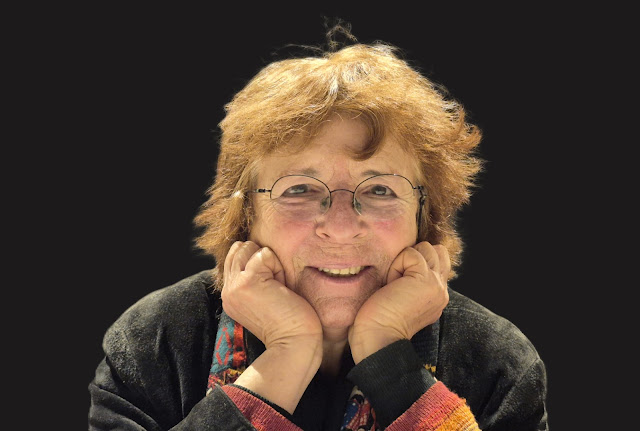
Assoc. Prof. Dr. Sibel Özbudun
An academic, anthropologist, writer, translator, and activist. She was born in 1956 in Istanbul. After graduating from Üsküdar American Academy for Girls, she went to France, where she studied language for three years and pursued sociology at Paris VII and other universities in Paris. After returning to Turkey, she enrolled in the Department of Anthropology at the Faculty of Letters of Istanbul University and graduated.
Özbudun worked for a long time in publishing (Havass and Süreç Publishing Houses) and as a translator. In 1993, she began her master’s studies in the Department of Anthropology at Hacettepe University. In 1995, she became a research assistant in the same department. She also completed her PhD at the same university.
Fluent in English, French, and Spanish, Özbudun has produced numerous translations and original works. Most of her original works are collective studies co-authored with Temel Demirer and other writers.
NOTES
[1] 18 Nisan 2026 tarihinde İstanbul’da Sosyalist Kadın Hareketi (SKH) ile söyleşi.
[2] Nâzım Hikmet
[3] Emine Özcan, “Kriz Kadınları Sadaka Ekonomisiyle Mağdur Ediyor”, BİA Haber Merkezi, 8 Ekim 2008
[4] Let me not fail to mention that the “narrowly defined” unemployment rates announced by TÜİK… In other words, TÜİK does not count as “unemployed” those who have given up looking for a job out of despair, those who work temporarily or part-time, seasonal workers, etc. When these groups are included, we see that the broadly defined unemployment rate reaches 24.7%. While this rate stands at 19.7% for men, it rises to 33.2% for women. (“Three times the real TÜİK figures: One million people became unemployed in one month”, Birgün, https://www.birgun.net/haber/gercek-tuik-rakamlarinin-uc-kati-bir-ayda-1-milyon-kisi-issiz-kaldi-506138)
[5] Let us not forget that in this country, of the more than 33 million women aged 15 and over, 14.7 million—nearly half—are “housewives” (a category that does not appear in unemployment statistics).
[6] Sinan Burhan, “Erdoğan Daha Ne Yapsın Nankörler!”, Yeni Akit, 11 Şubat 2024. https://www.yeniakit.com.tr/yazarlar/sinan-burhan/erdogan-daha-ne-yapsin-nankorler-44523.html
[7] Aslı Atakan, “Büyük Gıda Krizi Kapıda: İklim Değişikliği ve Savaşlar Milyonlarca Kişiyi Aç Bırakacak”, İklim Haber, 14 Ağustos 2023, https://www.iklimhaber.org/buyuk-gida-krizi-kapida-iklim-degisikligi-ve-savaslar-milyonlarca-kisiyi-ac-birakacak/.
[8] Bkz. Jerri Mauldin, “The Vietnam War Peace Movement and the Role Women Played: Personally and Politically”, 2002, hdl.handle.net/10822/1051355.